This 150-Year-Old Church Is Now an American Garment Factory
Where a congregation once gathered in a former coal mining village, industrial sewing machines now run beneath the stained glass. Hocking Hills Garment Center produces knit and woven apparel for American brands using lean one-piece-flow production, skilled Appalachian hands, and small-batch runs that actually fit your business.
Knits · Wovens · Small-batch production · Garment dyeing · Reclaimed & circular projects
A 150-year-old church, saved and put back to work
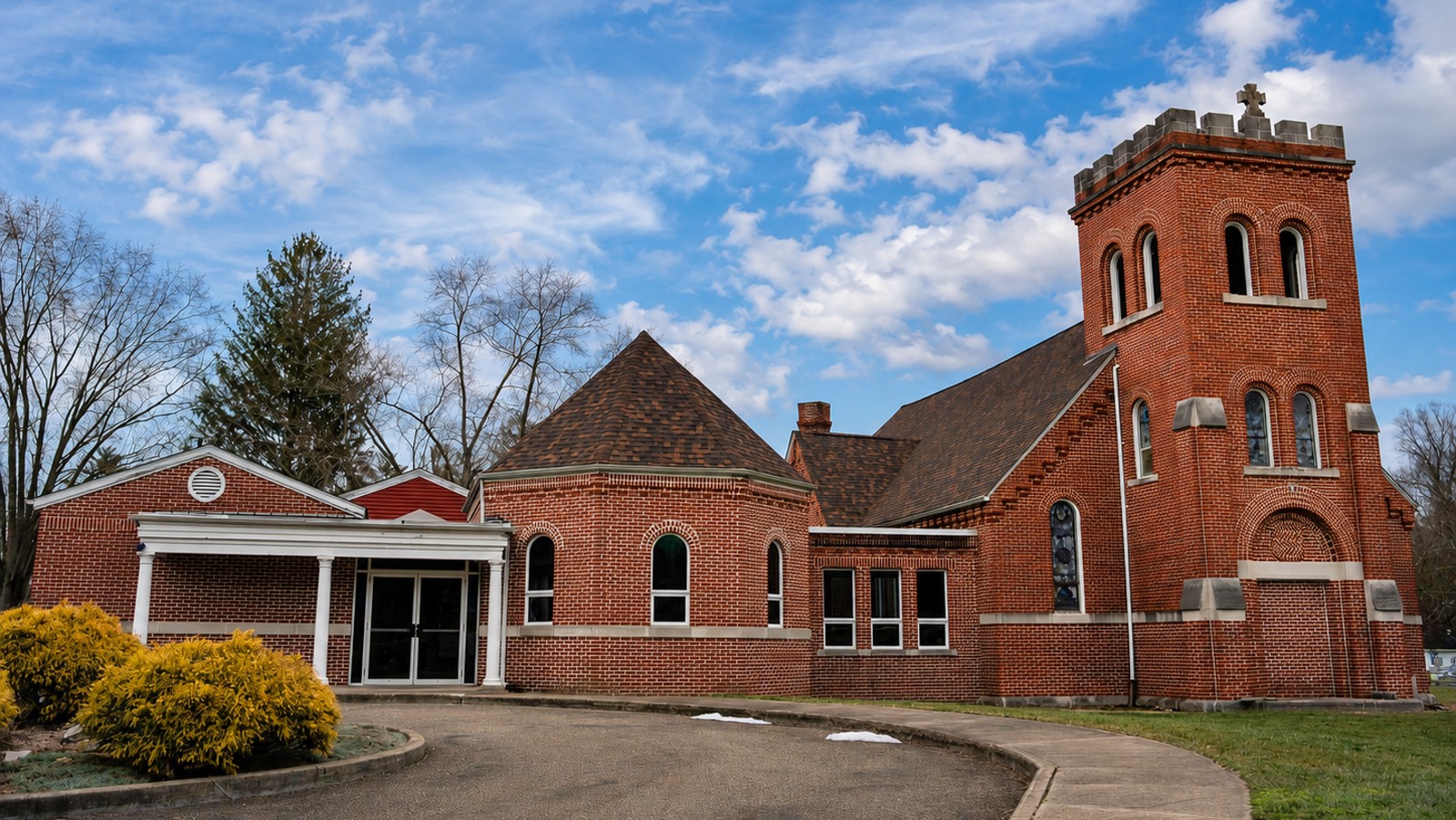
The brick church on Bank Street was built in the 1890s, when Buchtel was a working coal town. When the Diocese of Steubenville decommissioned it, they wanted the building to serve the community rather than become a hotel or a brewery.
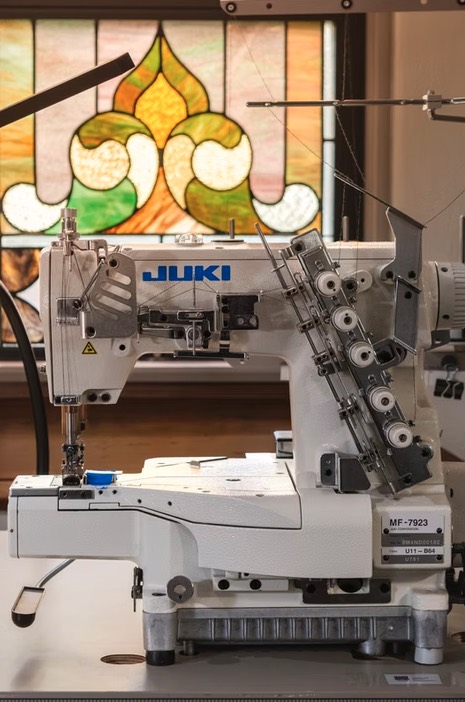
In 2024 our founder, Betsy Franjola, bought it and brought manufacturing back to Appalachian Ohio. The pews are gone. The stained glass stayed. Today Juki coverstitch machines and Jack sergers run in the light of those windows, and the arched doorway in our logo is the church's own.
We make more by using less. That belief shapes how the building is used, how garments are constructed, and how we treat the people who sew them.
A real American factory, built for brands that care how things are made
From team jerseys to festival merchandise to farm-to-garment T-shirts, we cut, sew, and finish apparel the right way: one garment at a time, by trained hands, in Ohio.
Cut & Sew Manufacturing
Full cut-and-sew production for knit and woven apparel, from cutting and sewing through finishing and quality control.
Small-Batch Production
Flexible small-to-mid-sized runs without offshore minimums, right-sized for growing American brands.
Knit Apparel
T-shirts, jerseys, and cut-and-sew knitwear, including dirt-to-shirt programs using American-grown, American-knitted fabric.
Woven Apparel
Shirts, overalls, workwear, and structured pieces built with the stitch strength each garment actually needs.
Garment Dyeing
Garment-dye finishing for rich, lived-in color, coordinated with your production run.
Sustainable & Circular
Reclaimed-textile projects, regional supply chains, and durable construction that keeps clothing out of landfills.
Quality you can see in every seam
Most offshore factories chase speed above all else. We build each garment with one-piece-flow production, a lean method where a single garment moves through the line and gets full attention at every operation. Problems get caught at the seam where they happen, not in a returns pile three months later.
“We're going to do the stitch length that's appropriate to the strength of the garment. We're not cutting corners.” Betsy Franjola, Founder
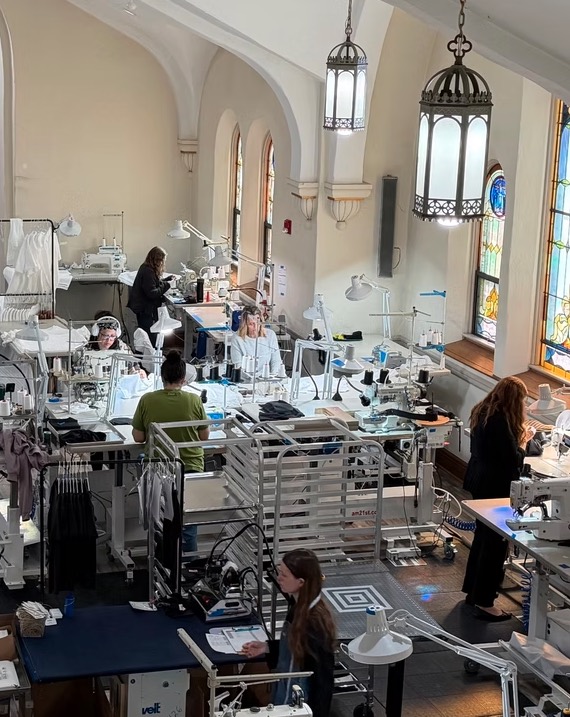
Industrial machines under stained glass
Sewists work at Juki and Jack industrial equipment in a room built for light. It is, as far as we know, the only garment factory in America with a bell tower.
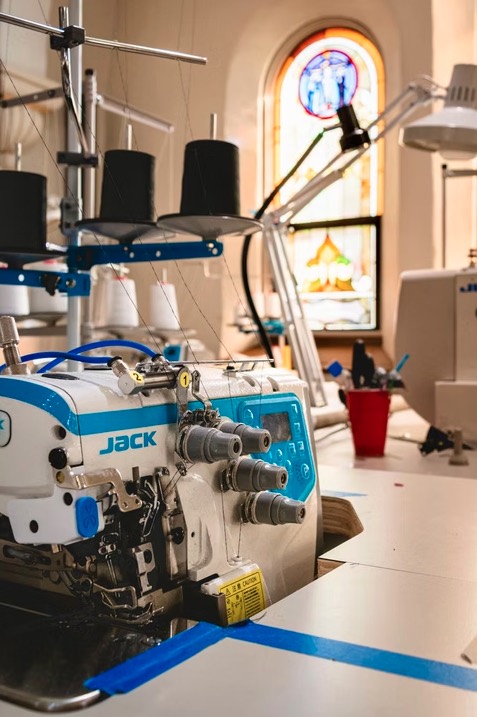
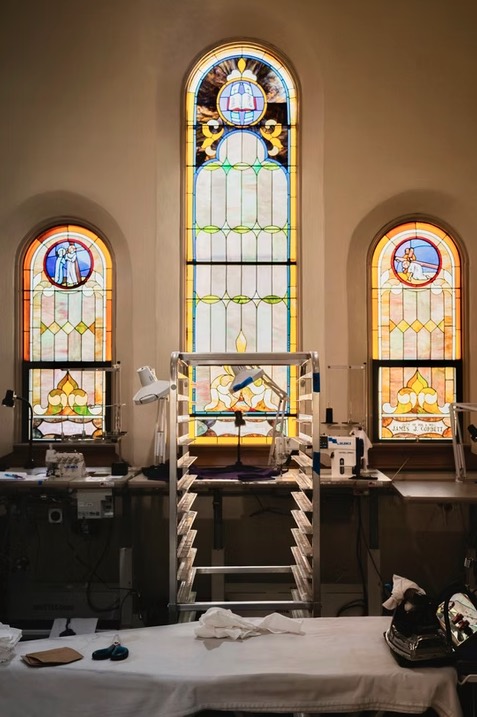
Recent work sewn in Buchtel
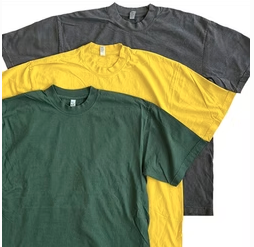
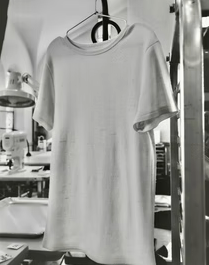
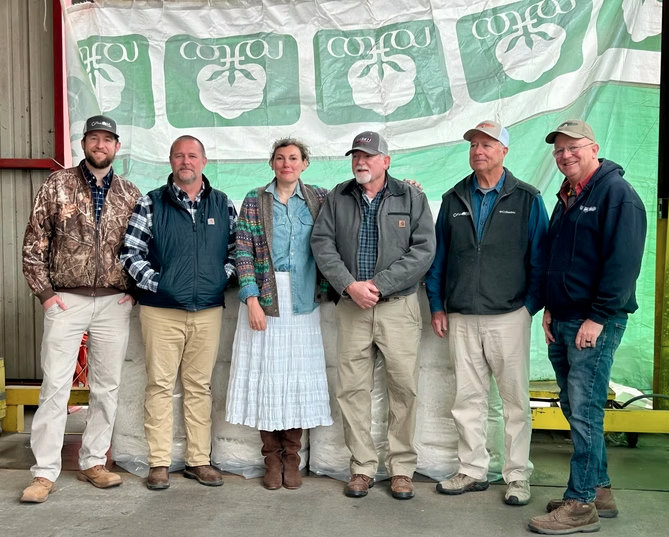
Dirt-to-Shirt T-Shirts
Cotton grown in Virginia, spun and knitted in North Carolina, sewn by HHGC in Ohio. A fully American supply chain.
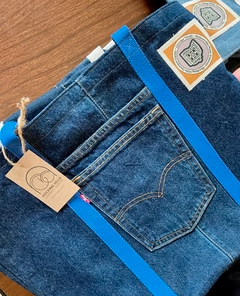
Reclaimed Denim Totes
Old jeans and jackets remanufactured into 50 festival totes with Circular Thrift. Zero new fabric.
Rebuilding American garment making, one job at a time
Betsy Franjola grew up in Athens, Ohio, then spent 20 years in corporate fashion with The Limited, Abercrombie, Karl Lagerfeld, and Juicy Couture, and launched two companies in Los Angeles before coming home.
She knows exactly how global apparel manufacturing works, which is why she built something different: a factory that trains its own sewists, publishes where its materials come from, and treats skilled work as the point rather than a cost to squeeze.
Today HHGC runs a production floor and an industrial sewing school, with an apprenticeship partnership with Hocking College and a JobsOhio-backed expansion creating 20 new jobs.
Have a garment to make?
Tell us about your product, quantities, and timeline. You'll get a straight answer about fit and a clear path from sample to finished goods.